This is For the Lover in You: Donnie and Atlanta
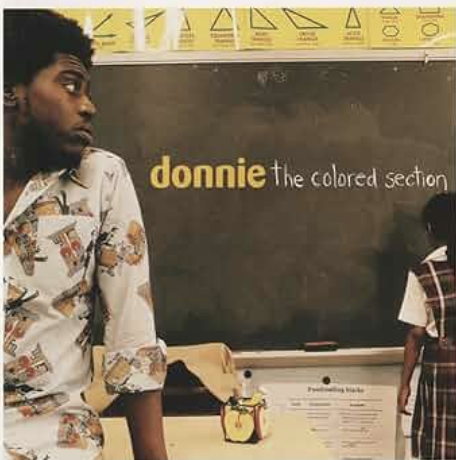
Donnie, The Colored Section, 2002
Donnie is an artist often relegated to the Atlanta neo-soul era of Yin Yang Music Cafe and FunkJazz Kafe. Not for me. When I heard he was performing at the 2026 Atlanta Jazz Festival, I was elated and energized by the promise of live music filled with spirit and love. Thank you NPR and WABE for giving me the hot tip.
Donnie belongs to a generation of artists who watered their roots and grew into living history. Donnie is often likened to his late cousin, Marvin Gaye, or Stevie Wonder, for his soulful social commentary. It is not just the musical artists that Donnie harkens to in his music and his energy because–listening closely–Donnie has James Baldwin’s literary spirit. Lovers move in intense ways. A true lover loves more than themselves or their partner–they love their people, their world, and follow one of the most important adages of James Baldwin:
I love America more than any other country in the world and, exactly for this reason, I insist on the right to criticize her perpetually.
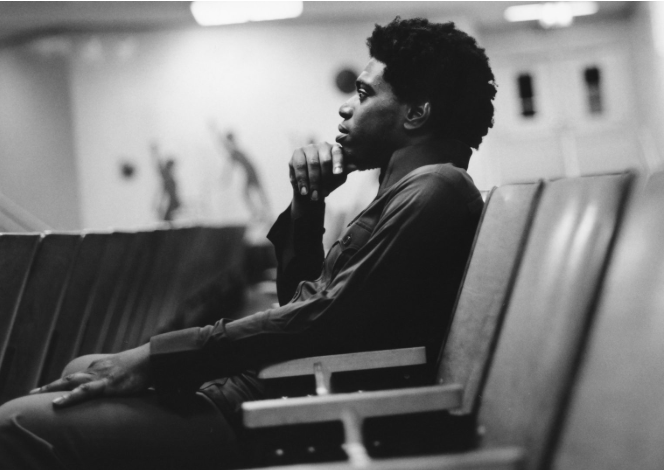
In Conversation: Donnie Looks Back at “The Colored Section”, photographer Andrew Dosunmu
Donnie’s album, The Colored Section, is a tour de force and shows love through his social critique. Donnie is part of my spiritual pantheon–an artist who moves in love. There’s no way to hear “Heaven Sent” without wanting it to be played at your wedding. The Colored Section, Donnie’s debut album, earned enthusiastic praise for its vintage sound paired with its thoughtful cultural commentary. For Donnie, music has a greater purpose than wiggling hips–either in the bedroom or on the dance floor. While songs like “Turn Around” and “Heaven Sent” have a richness that could bring one to tears, the lyrics have the depth that draws one to the easel, the keyboard, or to the journal.
Donnie and India.Arie performed a Donny Hathaway/Roberta Flack tribute performance at Yin Yang and everyone and they mama wanted to be in the tiny building.
The late nineties and early aughts had a respect and nostalgia for the soul music of earlier generations combined with an understanding of the importance political and social consciousness evident because even mainstream R&B and hip-hop incorporated the the thread of the blues and gospel into the music so skillfully that it refreshed genres and made them relevant to the moment.
“Killing Me Softly remixed by Lauryn Hill, “I’m Goin’ Down” with a New York edge through Mary J Blige, and “4 Leaf Clover” remade by Erykah Badu immediately come to mind, but also the sampling of Billie Holiday, Herb Alpert, and Miles Davis in hip-hop songs–Jay-Z is especially adept at this type of throwback–leaned into honoring the past.
The first time I saw Donnie perform, I was a young college student when the world all seemed to root “for everyone Black.” There seemed to be an abundance of Black small businesses with a distinctly Pan-African mission, and these businesses were not focused on evolving into megacorporations trading on a global stock market, no concern for the NASDAQ or the NIKKEI index, because the passion for remaining grassroots was the point, not a stepping stone for mainstream acclaim. Life Essentials and Domiabra–a wonderful roti shop hidden behind the health store–were there for the community and Soul Vegetarian existed to supplement the funds raised for Hebrew Israelites. Medu bookstore in Greenbriar Mall ensured that people had access to books across the African diaspora sorely missing in big box bookstores. In a city that at the time was still referred to as the “Black Mecca,” Black entrepreneurs worked to be bulwarks against erasure and inspire Black creatives. Neo-soul and hip-hop musicians thrived and were nourished by the history and made a sacred vow to be the stewards of the culture using what little they had to propel others to embrace, experience, and experiment with what is truly meant to be colored.
We live from the head down / and not the feet up
(“Cloud 9”)
FunkJazz Kafe was the pulsing heartbeat of the culture, thriving in a seven story renovated church termed “The Tabernacle,” provided a space to enjoy arts and music in which people could be spectators and participants. Open mics and jazz band battles on one floor, on another floor there were walls covered in canvases along with paint and sundry art supplies for everyone to tag the walls or make elaborate murals, and, on the bottom floor, the artisans selling their crafts–but not to be outdone by the secret guest performer on the main stage. However, all those manners of excitement were dwarfed by the purpose–a regular food drive for people in need. The “party with a purpose” could not be better expressed by a space whose entire raison d'être was to expand the reach of Black people–inspire them to create on the spot through music and art which would later be used (never thrown away) for future events and the non-perishable goods that would carry some families a little further until they could define their own lives. A beautiful time. It was a collective (never individualistic) and everyone became a “Beautiful Me.”
Rather than be controlled by the environment–which is far too often uninhabitable–Black people carve and choose to create, dream, and reshape spaces. Operating in a spiritual space, not an earthly one, as Donnie puts it, we were “just fine on Cloud 9.”
My love for Donnie runs deep because of his impact on me at that moment. I am running away from explaining the first time I heard him. I believe it is because it was so special that I have no way to describe it that would give it the necessary gravitas. (Just know that “Heaven Sent” made me cry the first time I heard it–though I am less ethereal now than I was then.)
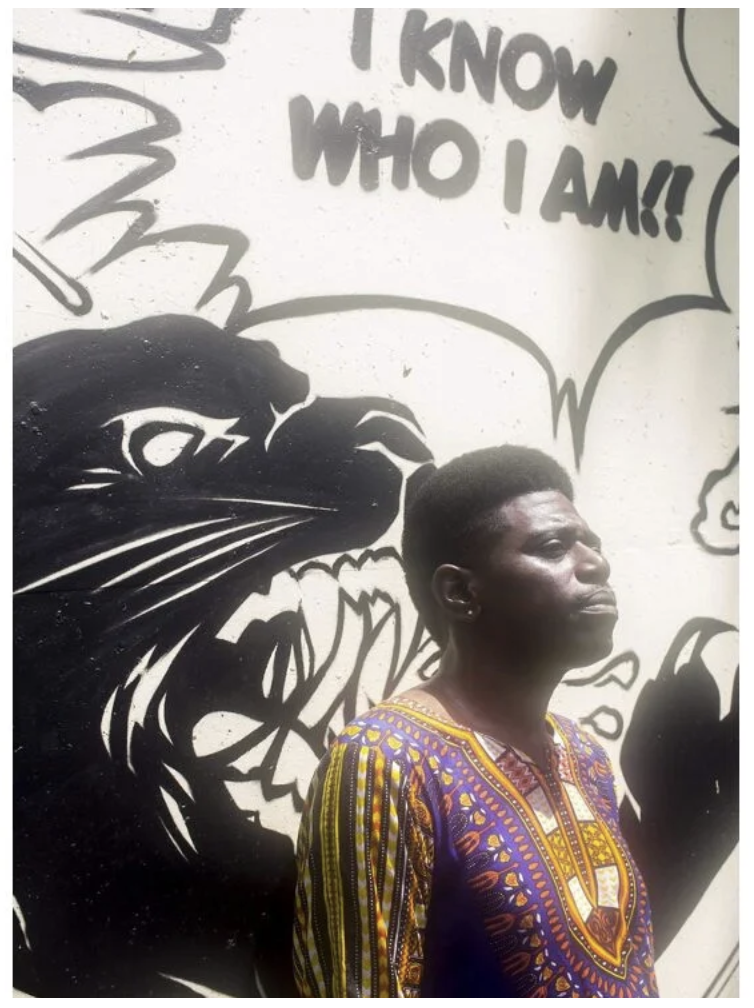
(Click@rtist Media/Courtesy of Donnie)
Donnie performing at Atlanta Jazz Fest after decades of quietude is not only thrilling but perfectly apt. He watered the roots, he bent but did not break, and, despite the shift to more vapid forgettable music, his contributions to the culture remain as a reminder.
Who would have thought that we would have come this far?
I said, who would have thought that we would almost forget who we were?
(“The Colored Section”)
At a moment on a precipice of losing all that was afforded to us through the Civil Rights Voting Act, Donnie is my constant but necessary earworm.
Waiting on the New World Order to come
don’t you know it’s here and almost gone!
(“Big Black Buck”)
It is crucial to understand that Donnie is integral to the culture. He insists on singing critiques of the institution known globally with laughter and derision, despite its tender age still in throes of puberty, as America.
I am nostalgic for those times, but I am not despondent even in the face of the fierce reversals of social justice and human dignity. If Billie Holiday can live on in innumerous renditions of “Strange Fruit,” if James Baldwin can be exhumed in I Am Not Your Negro, if Buddy Guy can be returned to the spotlight in Sinners, and Donnie can return to the stage, the roots are still strong and the tree will not fall.
I’m not a nigger / I’m a ne-g-ro
when I become a nigger / I’ll let you know
(“Beautiful Me”)
As James Baldwin would tell Donnie–if he was not in the ancestral space– “your crown has already been bought and paid for,” so he might as well wear it.